
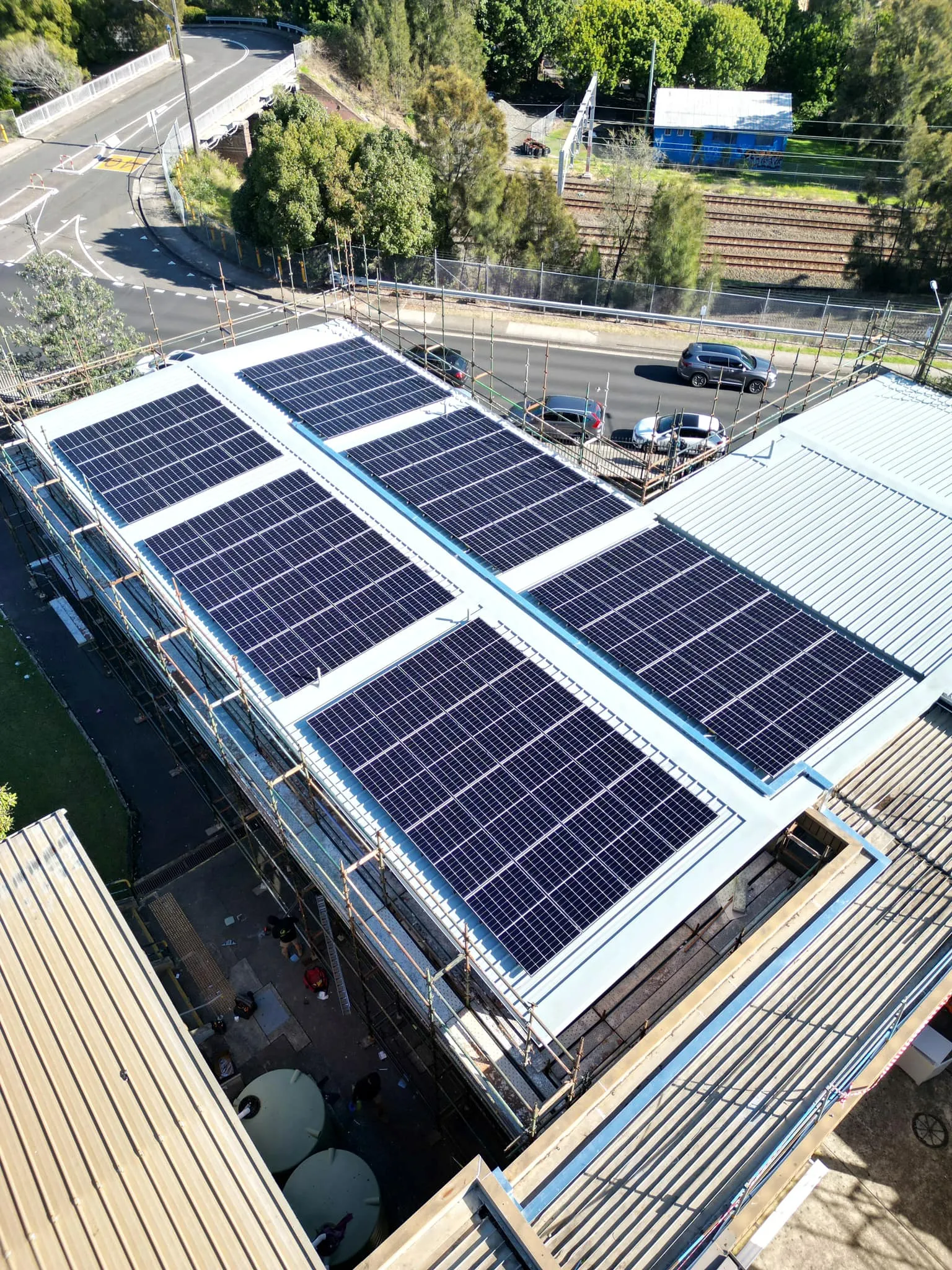
Factories, warehouses and farms draw heavy power through the working day, when solar produces the most. Clean Earth Solar designs and installs industrial solar panels across the Hawkesbury and greater Sydney, from large factory roofs to ground-mounted arrays on open land. Most sites at this scale run on three-phase supply, so we design the inverters and protection around it from the start.
An industrial solar system pays its way by covering power you would otherwise buy from the grid at daytime rates. The benefits stack up over the life of the system:
Industrial jobs are the large-scale end of our solar panel installation work: big sites, high-kW arrays, three-phase supply and more involved network approvals. Offices, shops and smaller business premises usually suit a commercial solar system on the roof instead. For industrial sites, we install:
We fit high-efficiency AIKO and Trina panels, with Enphase microinverters where panel-level reporting matters more than a central inverter. The full range is on our solar panels, inverters and batteries list.
Planning a large-site system?
Industrial systems need more planning before the first panel goes on. These are the four things we check on every large site.
Older sheds and factory roofs were not always built to carry extra weight. We inspect the sheeting, purlins and fixings at the site assessment and tell you early if a structural engineer’s assessment is needed. Where the roof is unsuitable, a ground-mount array is often the simpler option.
Most industrial sites run three-phase power for motors, compressors and refrigeration. We size the 3 phase solar power system to that supply and spread generation evenly across the phases. We also check the main switchboard has the capacity and space for the new connection before the design is locked in.
Endeavour Energy, the network operator across the Hawkesbury, must approve larger systems before they connect. Depending on the system size and the local network, the approval can set an export limit or require extra protection equipment. We prepare the connection application and design the system to the conditions that come back.
Systems up to 100kW can create small-scale technology certificates, which reduce the cost at installation. Above 100kW, a system falls under the large-scale part of the Renewable Energy Target and creates certificates over time instead. We tell you which side of that line your design sits on, because it changes how the incentive works.
Rooftop is usually the right call when the roof is sound, faces north, east or west and has enough clear area for the load. Ground mount makes more sense when the roof is old, shaded or too small, and there is spare level land close to the switchboard. Plenty of farms and factory sites end up with both.
| What to check | Usually rooftop | Usually ground mount |
|---|---|---|
| Roof condition | Sound structure with plenty of life left | Older roof, or due for replacement soon |
| Available space | Plenty of clear roof area | Spare land near the switchboard |
| Shading | Little shade across the roof | Roof shaded by trees or taller buildings |
| Future growth | Limited room to add panels | Room to extend the array later |
our own team installs every system, with no subcontractors.
on every solar installation we complete.
if we don’t lower your bill by the amount we promised, we’ll pay it.
a SolarQuotes Platinum rated installer with 250+ Google reviews.
Tesla Powerwall Certified Installer (NSW), SigEnergy Gold and Enphase Gold Installer.
public liability cover on every project.

Your site already uses most of its power while the sun is up. An industrial solar system designed around that load cuts what you buy from the grid for the next 25 years and more. Clean Earth Solar has installed 6,500+ kW across 1,000+ systems since 2018, and every site assessment is done by an experienced installer with no pushy sales techniques.
It depends on the system size, which is set by your daytime energy use. Large roofs can carry high-kW arrays, and where roof space runs short, nearby land can take a ground-mount array. We measure both during the site assessment.
Solar can cover a big share of daytime use. Night shifts and heavy evening loads still draw from the grid unless battery storage is added. We design to share your roof or land can realistically support.
We plan the work around shifts, deliveries and production. Most of it happens on the roof or the ground-mount area, and the final connection needs a short, scheduled power shutdown that we agree with you in advance.
Solar panels typically perform for 25+ years. Inverters usually need replacing sooner than the panels, so we set out their warranty terms in the quote. Regular solar panel maintenance keeps output up on dusty industrial and farm sites.
Yes. Real-time monitoring shows what the system generates against what the site uses, so you can spot a drop in output early. Enphase systems add monitoring down to each panel.
Yes, if it is planned that way. We can leave inverter capacity, layout room and switchboard space for a second stage, although a larger system may need a fresh network approval.
The price depends on system size, rooftop or ground-mount structure, switchboard work, network approval conditions and whether storage is included. After assessing your facility, we give you a written quote with the expected savings so you can see the return before you commit.